
Versatility in Wildlife Control
Versatility in Wildlife Control
No Wi-Fi. No Power. No Problem.®
Share This Story, Choose Your Platform!

Using Trapmate Kiwi Plus to Monitor Foothold Traps for Beaver & Otter Management
Background
The owner of Apex Wildlife Services began his career working in wildlife removal before transitioning to the Urban Wildlife Program for the Georgia Department of Natural Resources (GA DNR). In that role, he responded to calls involving injured and diseased wildlife across nine metro counties in the Atlanta area.
After five years with the state program, he launched Apex Wildlife Services to provide professional wildlife management services across North Georgia.
As a one-man operation, efficiency and time management quickly became critical to operating a profitable business.
The Challenge
Wildlife trapping jobs often require daily trap checks, especially when using foothold traps. In Georgia, regulations require traps to be checked every 24 hours.
For jobs located far from home base, this creates several challenges:
- Long daily drive times
- Increased fuel costs
- Lost productivity that could be spent servicing other clients
- Difficulty extending trapping programs when animals remain active
One particular client presented these challenges clearly.
The property owner operated a trophy bass lake in Dawsonville, GA, where beavers and river otters were damaging the fishery and surrounding habitat. The site was located approximately 1.5 hours away, making daily trap checks time-consuming and costly.
The Solution
Remote Monitoring with Trapmate Kiwi
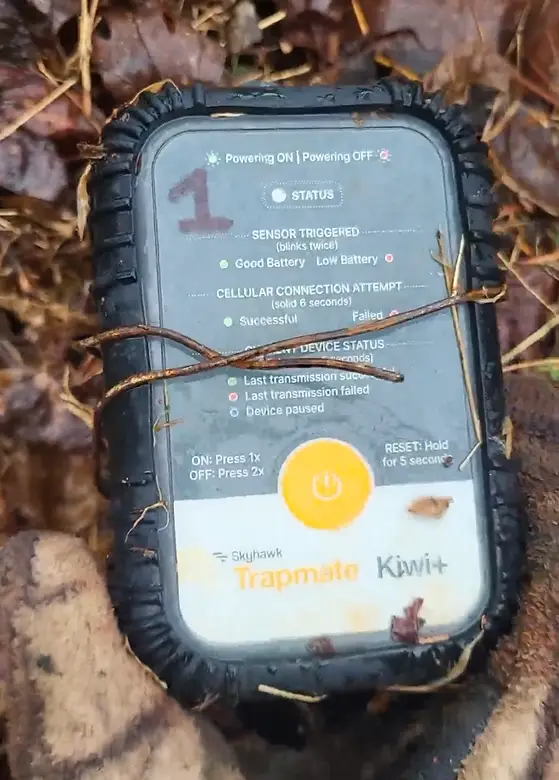
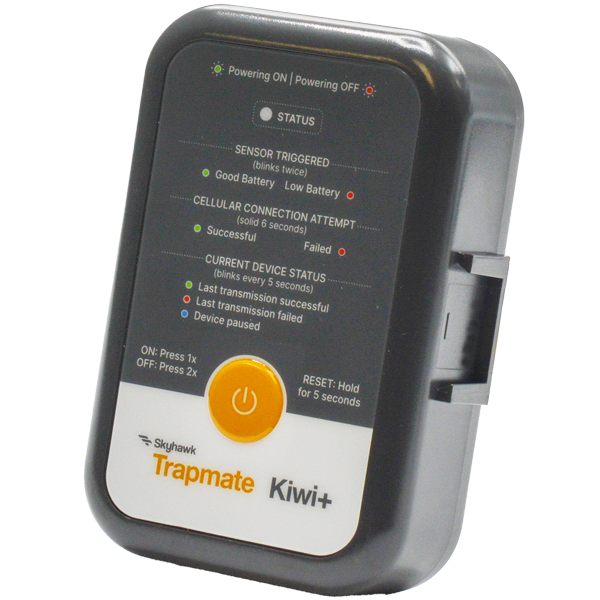
To increase efficiency, the technician began integrating Trapmate’s Kiwi Plus remote monitoring units into his foothold trapping setups. He currently operates six Kiwi Plus units, with plans to add more as his business grows.
Setup Method
To monitor foothold traps for beaver and otter capture, he developed the following system:
- A drowning set foothold trap is placed near the water’s edge.
- A 3–5 foot wire connects the foothold trap to the Kiwi unit.
- The Kiwi device is positioned away from the trap and hidden under leaves or natural debris to avoid disturbing wildlife.
- If an animal is captured, it begins to move and drag the trap, which in turn moves the Kiwi unit.
- This movement triggers an alert directly to the technician’s phone.
By separating the device from the trap itself, the system avoids potential issues wildlife sometimes have with trail cameras or visible electronics.
The Results
The remote monitoring setup has been incredibly successful in detecting captures and activity. Even with some sensitivity adjustments still being refined, the benefits have been substantial.
Key Advantages
Reduced Travel Time
Instead of driving 1.5 hours daily to check traps, the technician can monitor them remotely and only visit the site when activity occurs.
Lower Fuel Costs
Remote alerts eliminate unnecessary trips, significantly reducing gas expenses.
Extended Trapping Periods
Because monitoring requires less travel time, traps can remain active longer without increasing labor demands.
Improved Operational Efficiency
As a solo operator, the technician can manage more clients simultaneously while maintaining compliance with Georgia trap-checking regulations.
Compliance & Monitoring
Georgia law requires foothold traps to be checked within a 24-hour period.
Instead of checking traps blindly each day, the technician can prioritize site visits based on real activity.
Trapmate Kiwi provides an additional layer of monitoring by:
- Alerting the technician when trap movement occurs
- Allowing quick response to captures
- Providing peace of mind that traps are being actively monitored
Key Takeaway
For independent wildlife control operators, time and travel costs can quickly limit growth.
By integrating Trapmate’s remote monitoring, Apex Wildlife Services has been able to:
- Reduce unnecessary trap checks
- Extend trapping operations
- Increase operational efficiency
- Maintain regulatory compliance
Remote monitoring allows wildlife professionals to focus their time where it matters most — solving problems for clients.
Looking Ahead
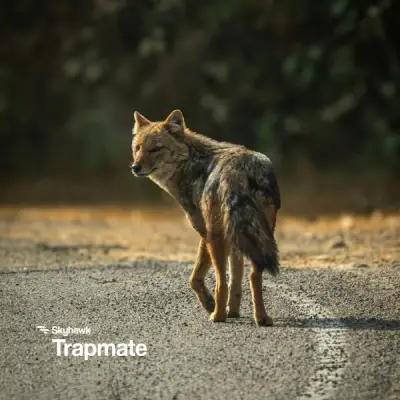
While the current system has been used successfully for beaver and otter trapping, the technician plans to expand its use to coyote land trapping in the future.
The same monitoring concept will apply:
- Keep the device hidden and away from the trap
- Use movement detection to trigger alerts
- Reduce unnecessary field visits
As Apex Wildlife Services continues to grow, remote monitoring will play an increasing role in helping the company scale operations efficiently.